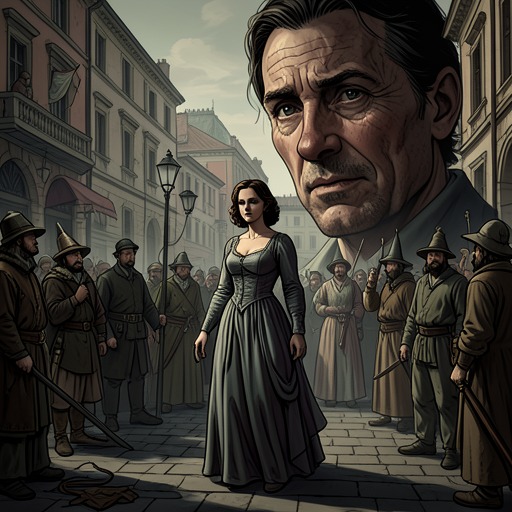
Helen Radley and Will Radley's past romance and maker relationship
The RadleysHelen Radley and Will Radley’s past romance is also the history of her conversion: the man she remembers as a lover in Paris is the vampire who turned her, a connection that neither time nor her marriage to Peter Radley has made emotionally simple. Their relationship persists through a photograph, a voice on the telephone, and the blood and letters Will has kept. For Helen, these are not merely remains of the past. They are reminders of a happiness she cannot erase and of a choice whose consequences she says she did not understand.
Paris and the Conversion
In a photograph marked Paris, 1992, Helen stands in Montmartre beside Will, laughing and appearing carefree. The old physical photograph is something she can hold, but she has never dared to scan it; she wishes it did not exist and cannot bring herself to destroy it or stop looking at it. Will is her convertor, and his face in the picture makes the memory more than a record of a younger self. The image preserves a night she cannot separate from the person who changed her life. The photograph holds opposed truths together. Helen remembers herself as happy and full of danger, and addresses her former self with a reproach; at the same time, she believes she could still look much the same and perhaps still be that happy. Its faded surface has not weakened its effect. For her, the image makes the past both alluring and unwelcome: it recalls a joy she still recognizes, while fixing that joy to Will and to the conversion that followed.
The Past Re-enters the Present
Years later, Helen calls Will and warns him not to come. The call itself is difficult for her: she has spent a long time trying not to think about his existence or imagine speaking with him, yet his familiar voice reaches her with immediate emotional force. Her warning does not dissolve the attachment; it exposes how much effort she has devoted to resisting it. The scene sets her conscious wish for distance against the intimacy that returns as soon as she hears him. When Will speaks with Helen at the Radley home, he deliberately brings Paris into their conversation. He recalls the night they flew there and landed in the Rodin Gardens, and asks whether she still thinks about it. Helen asks him to keep his voice down because Rowan is upstairs. She then sets their shared past against her relationship with Peter: she had been engaged to Peter and loved him, and wants to know why Will pursued her and changed what she had with Peter. Her questions include whether Will acted from rivalry with his brother, boredom, or insecurity; the evidence establishes these as Helen’s accusations and suspicions, not as motives Will confirms. Helen describes her younger self as foolish and says she did not understand the consequences. Will answers by recalling 1992 as precious to him and revealing that he kept Helen’s blood and their letters. The preserved blood makes the conversion tangible in the present, not only a past event recounted between them. Will also says Peter would recognize the blood, invoking the husband whose relationship with Helen she says Will disrupted. When Helen questions whether Will thinks she still feels more for him because he converted her before Peter did, she directly challenges the emotional claim he makes on the basis of that history.
Memory, Influence, and Unequal Attachment
Helen’s memories of Paris are specific: she recalls kissing Will on the roof of the Musée d’Orsay and walking hand in hand with him to a hotel on Avenue Montaigne. There, Will used blood-minding on the receptionist, who then offered them the presidential suite. Helen remembers the episode as wonderful and frightening, and says the memories remain fresh when she sees Will. Their past therefore carries both romance and a demonstration of Will’s power to influence others; the two are bound together in her recollection rather than cleanly separated. Will appears to understand the force of remembering. He wants to prod Helen into recalling the more daring self he believes remains beneath her present manner, and he describes her current home as a place emptied of life and dreams. Helen, meanwhile, insists on the life she chose with Peter and asks why Will had to come after her. The contrast is not simply between a vibrant past and a settled present: Will’s appeal to the past meets Helen’s knowledge that its excitement came with consequences she now regrets. The relationship also affects the family around them. During their exchange, Rowan comes downstairs and hears the urgency in Helen’s voice and Will’s words, though he initially cannot make sense of what is being said. Later, as Will recounts his past, Helen’s recollections interrupt her train of thought. The narrative presents memory itself as an influence passing between the former lovers: Will raises Paris, Helen is pulled into remembered scenes, and the conversation becomes harder for her to control. Her distress does not mean that she accepts his account of their bond; she continues to question both his motives and the conversion that connects them.
The Bond’s Material Remains
Will’s blood and letters give the old relationship a continuing material presence. He tells Helen he kept them, presenting himself as sentimental and treating the objects as souvenirs of their shared year. Helen reacts with horror to the revelation about her blood. The preservation may testify to Will’s attachment, but in the present it also gives him something with which to unsettle her and invoke her past with Peter. The evidence leaves the gesture ambivalent: remembrance and leverage occupy the same objects. The relation is thus neither a romance simply recovered nor a history cleanly repudiated. Helen cannot discard the photograph, and hearing Will still makes the past feel immediate; nevertheless, she names her love for Peter, challenges Will’s reasons for pursuing her, and regrets not understanding the consequences when she was young. Their conversion bond keeps the earlier intimacy active, but it does not settle what that intimacy means. Instead, the novel makes the enduring power of their connection visible in the distance between the happiness Helen sees in the photograph and the questions she asks the man beside her.